{SECRET_NAME}
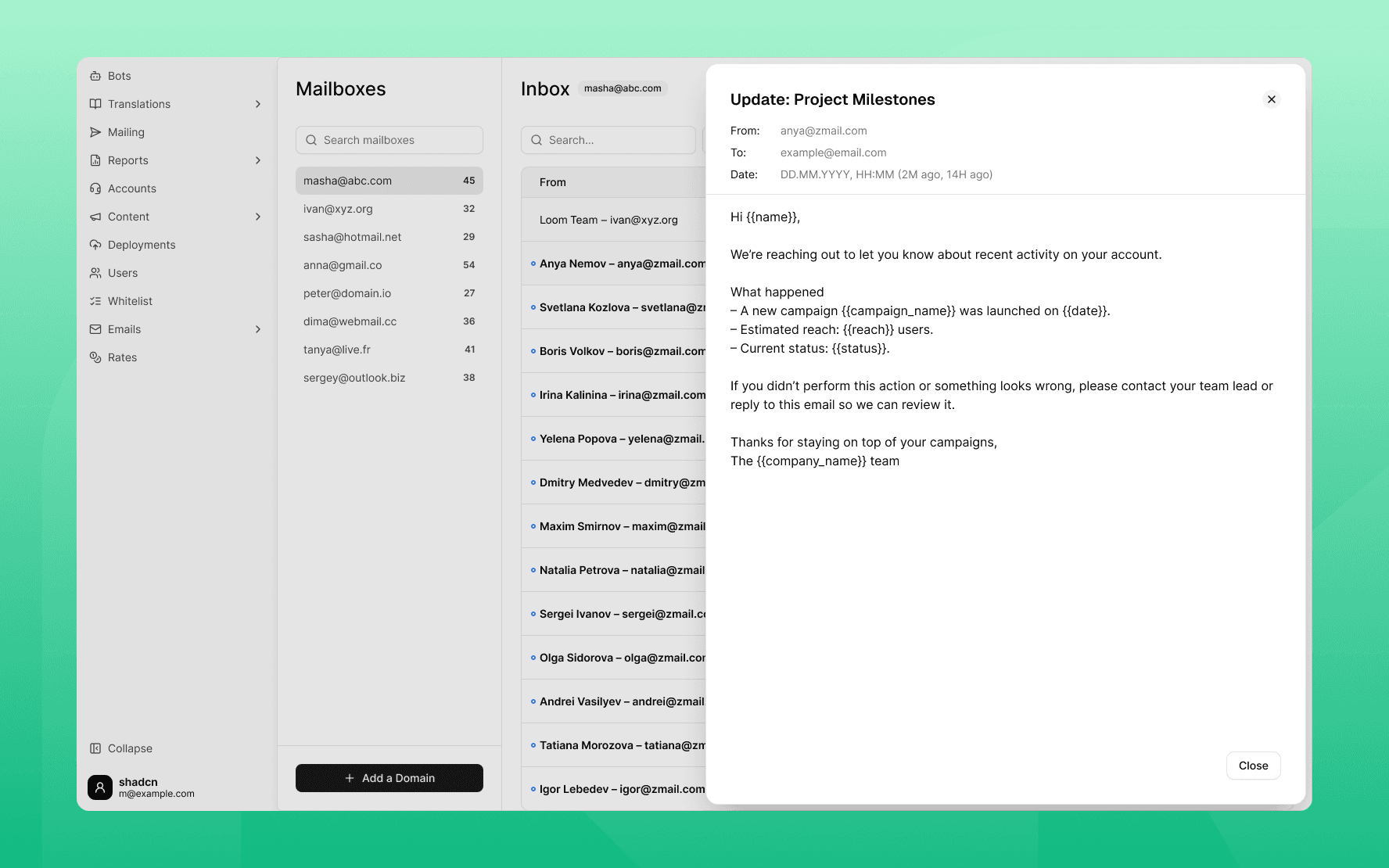
Built an AdTech operations platform for Telegram from scratch — one system to manage bots, traffic, localization, and broadcasts at scale.
- Years
- 2024–NOW
- Role
- Middle+ → Lead Product Designer
- Scope
- Management cabinet for mini apps, bots, channels, analytics links, translations, Telegram broadcasts, and deployment across different geos
6+ scenarios in 6–9 months
Shipped six core workflows from zero to production in the first nine months.
From dashboard to AdTech suite
Took the product from a 2-page dashboard to a fully operational AdTech management suite.
−30–40% operational load
Reduced daily operational overhead for media buyers across key workflows.
Foundation for 2+ years of growth
Designed the system architecture the team continued to build on for over two years.
Situation
I joined the project when the team was still operating like a startup and the product was only beginning to take shape. We were building a single management platform for our mini apps and inline bots in Telegram — a tool that had to support both direct clients and teams of media buyers working with our traffic funnels.
At that stage, the product had outgrown its initial dashboard format, but the team was still very small. We needed an interface that was not just usable, but scalable — something structured enough to support fast product growth without turning into a collection of disconnected tools.
Task
Business goal: create a unified platform that would help us scale distribution and day-to-day operations around our PWA products, while supporting media buying teams and our traffic funnel methods inside one system.
User goal: give clients and media buying teams one place to manage bots, channels, tracking, localization, mailings, and geo launches — without switching between fragmented tools or manual processes.
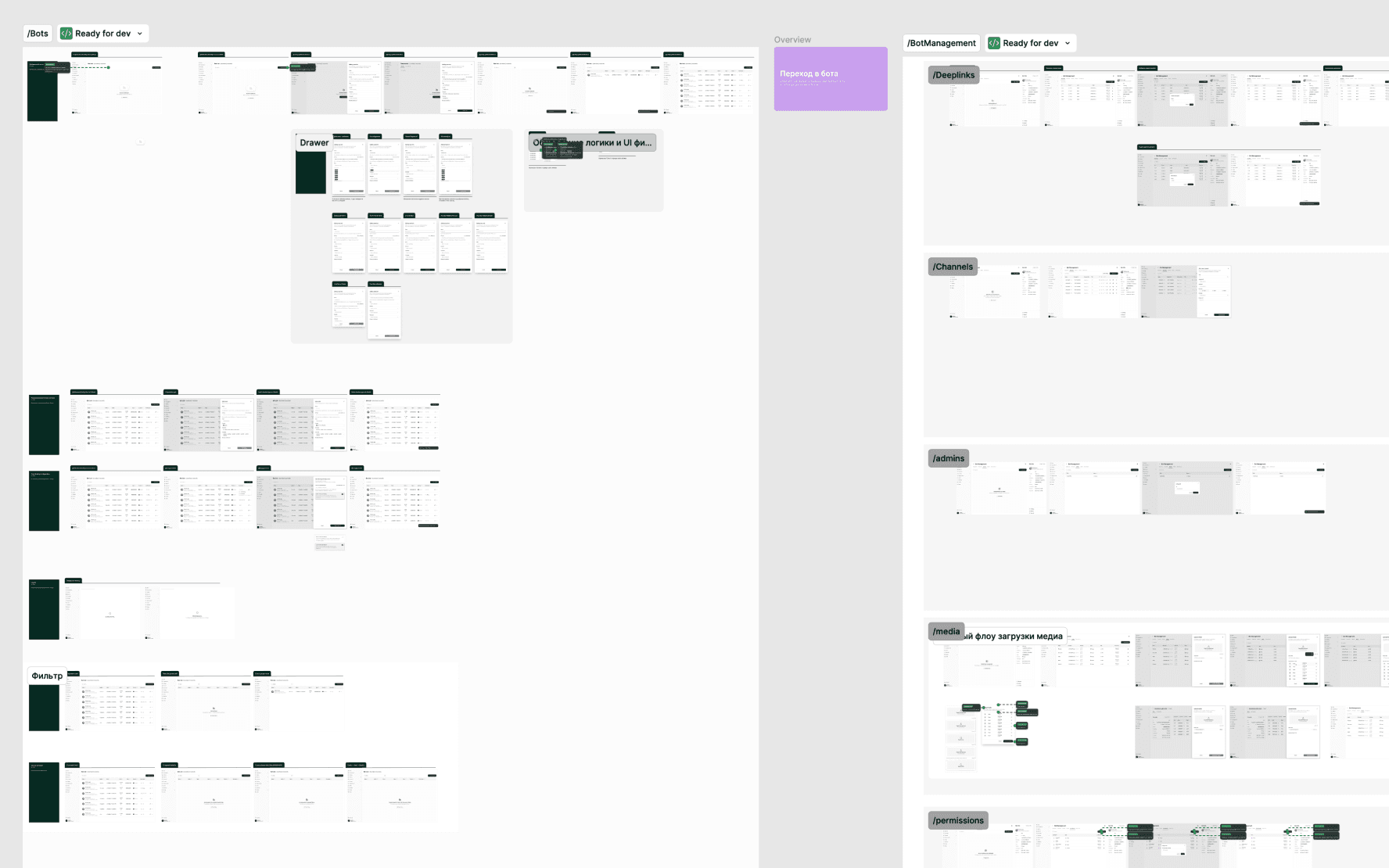
Team & Role
When I joined, the team was extremely lean: I was the only designer, working alongside one frontend and one backend engineer. As the product grew, the team scaled to around 10 people.
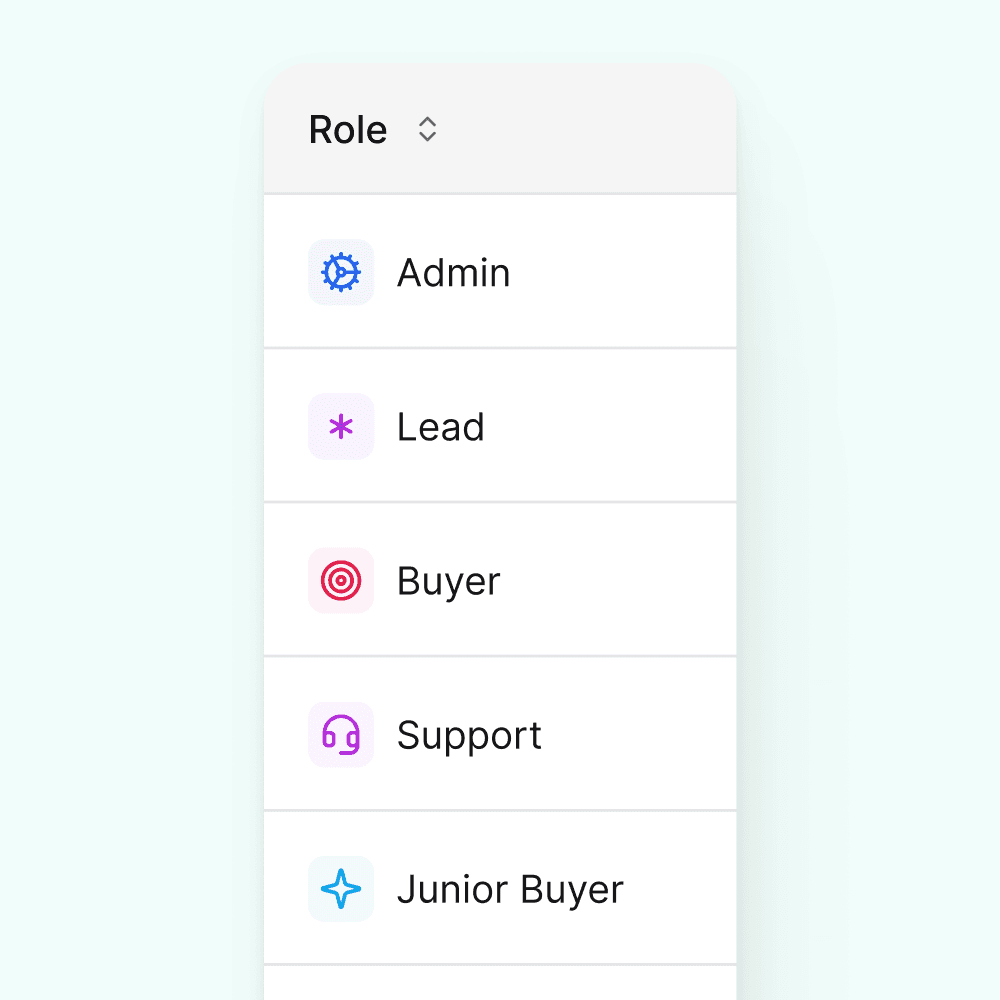
Over time, my role also expanded. I started as a product designer focused on flows and interface design, and later moved into a broader design leadership role — shaping product logic, generating new ideas, maintaining delivery speed, and building design-to-development pipelines.
We worked as a design-first team: designers were responsible not only for screens, but for thinking through the full client interaction model before implementation. My responsibility was to keep the product coherent, scalable, and fast to ship.
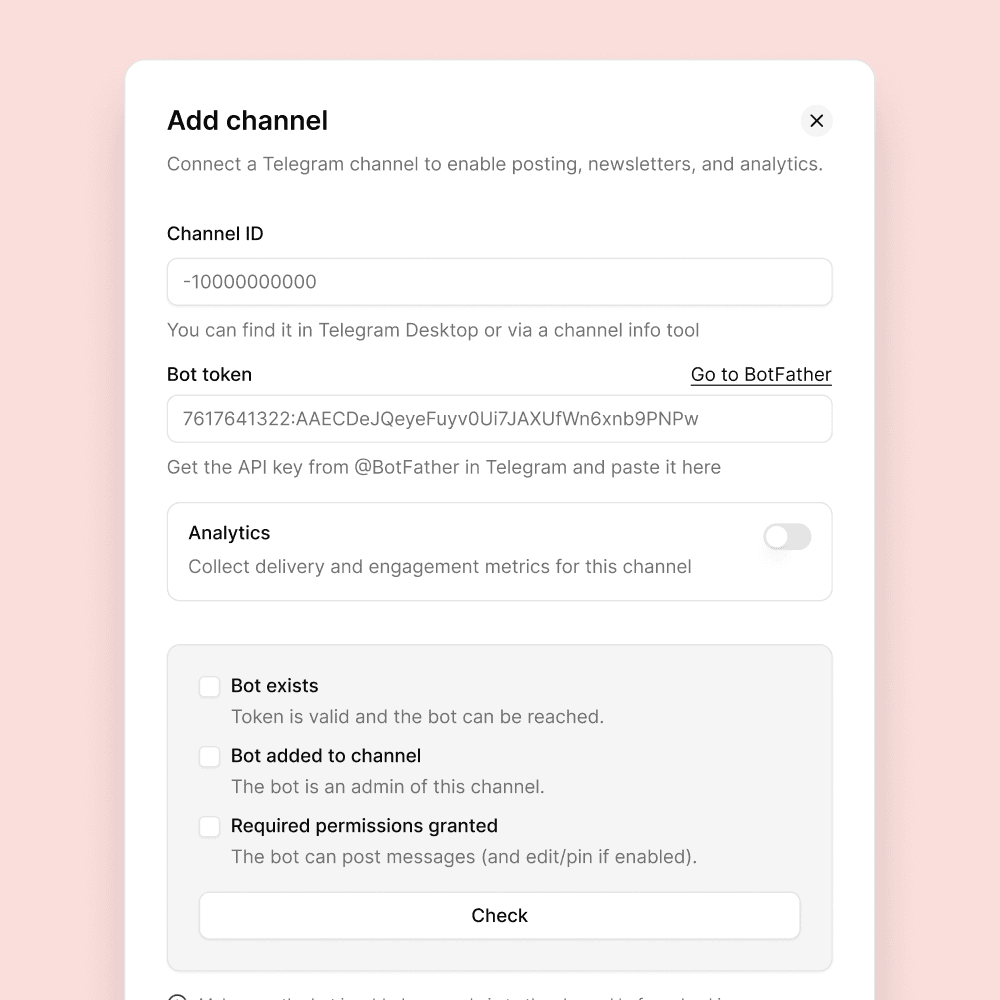
Built the platform foundation
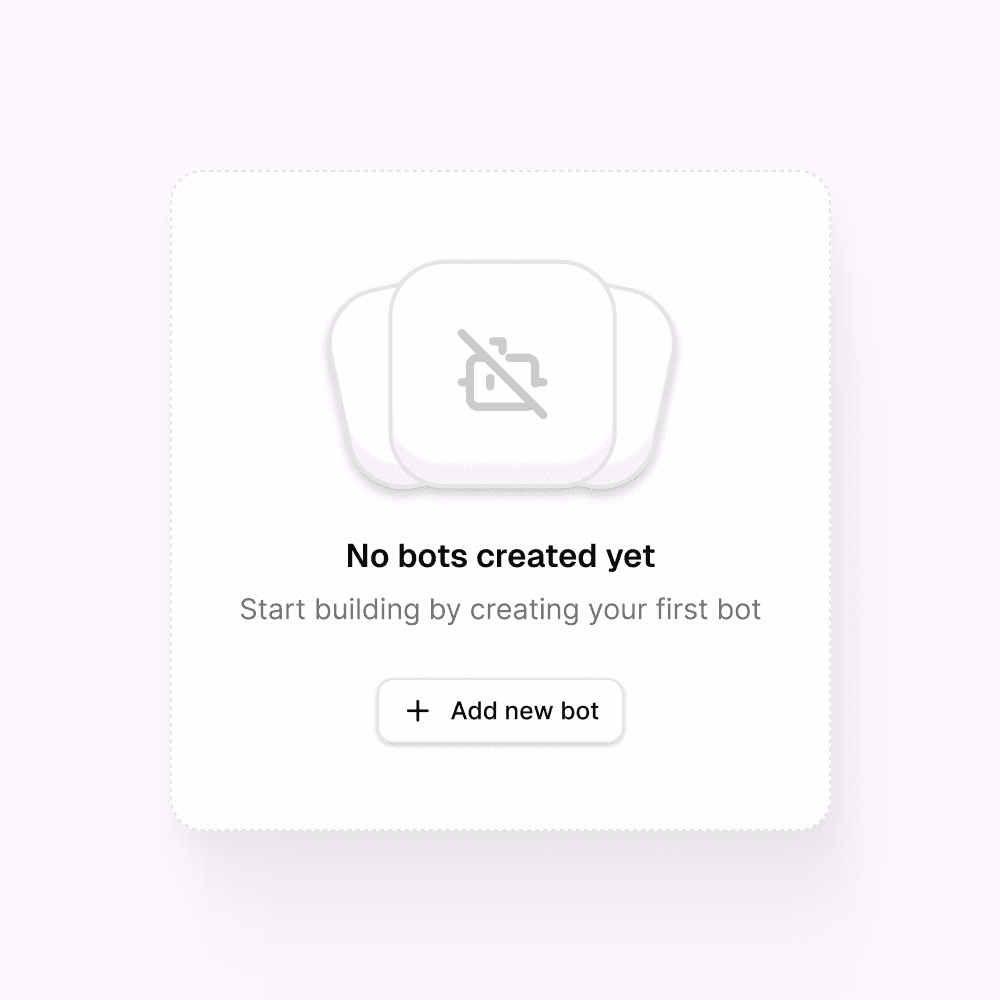
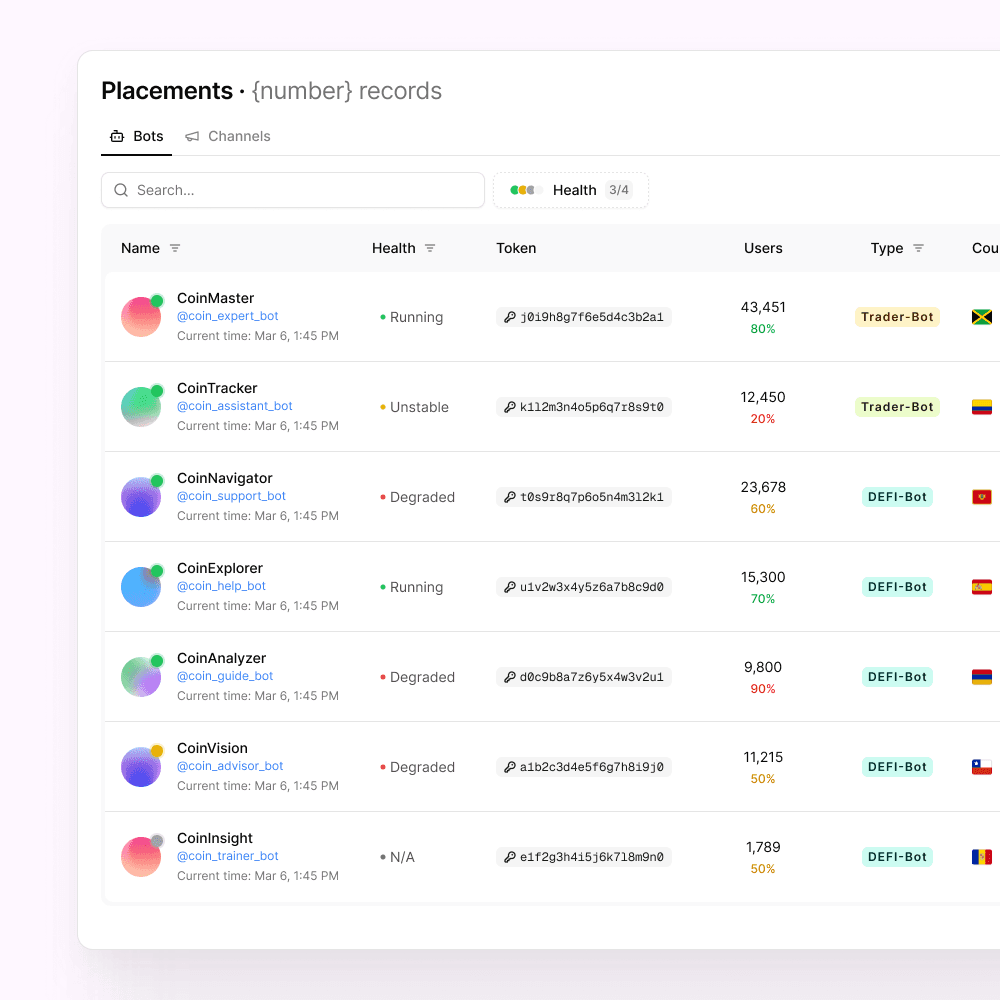
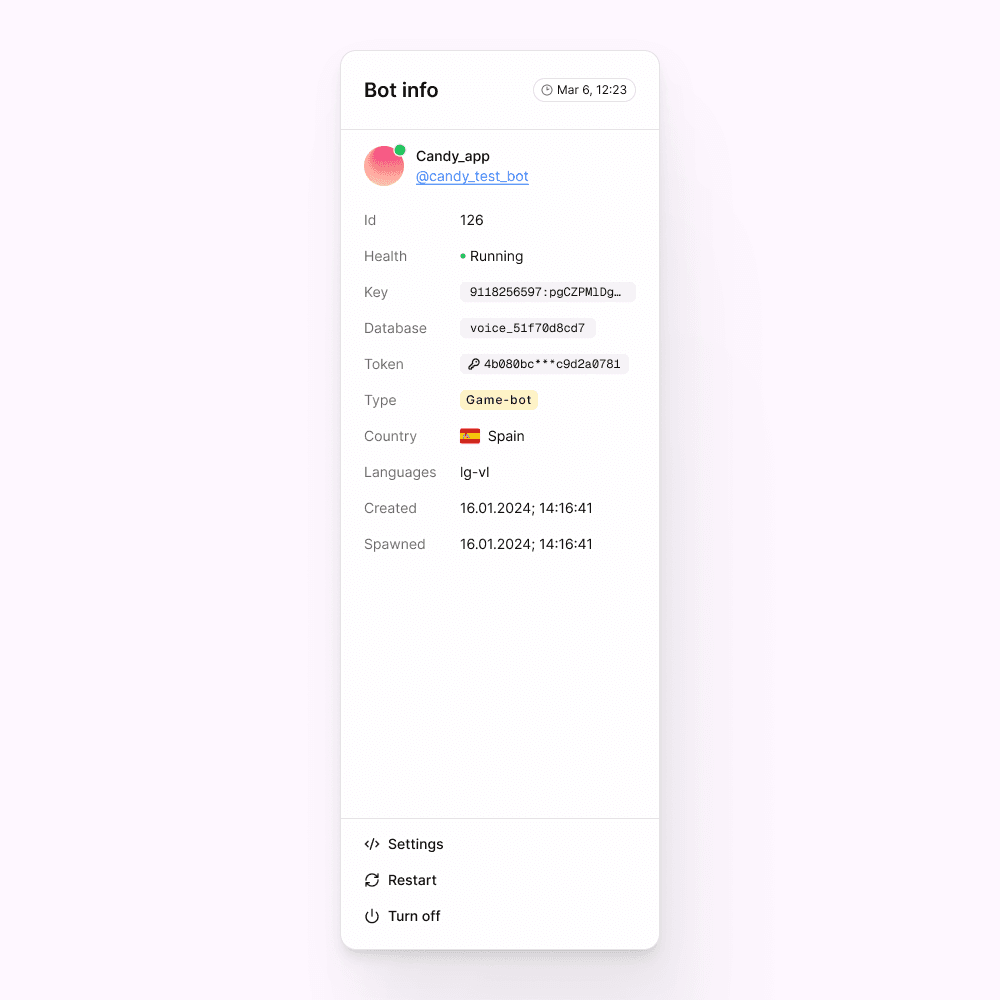
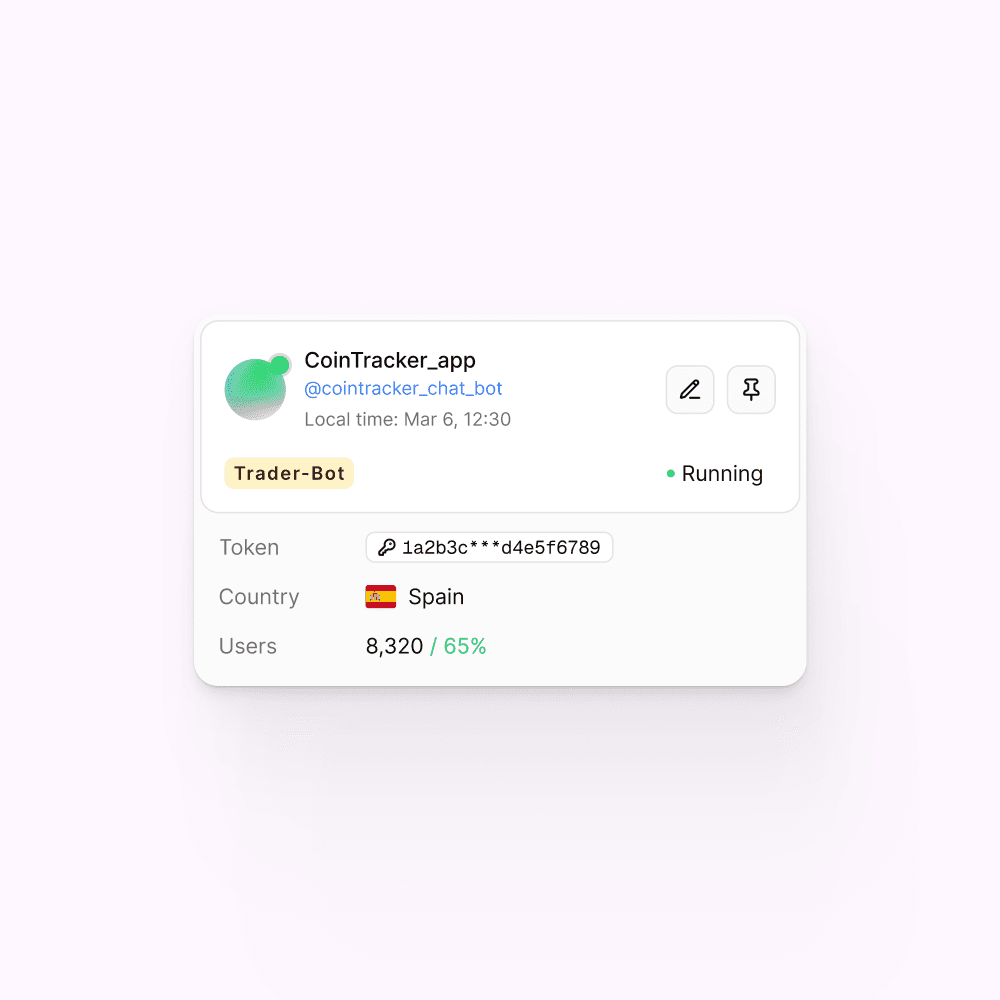
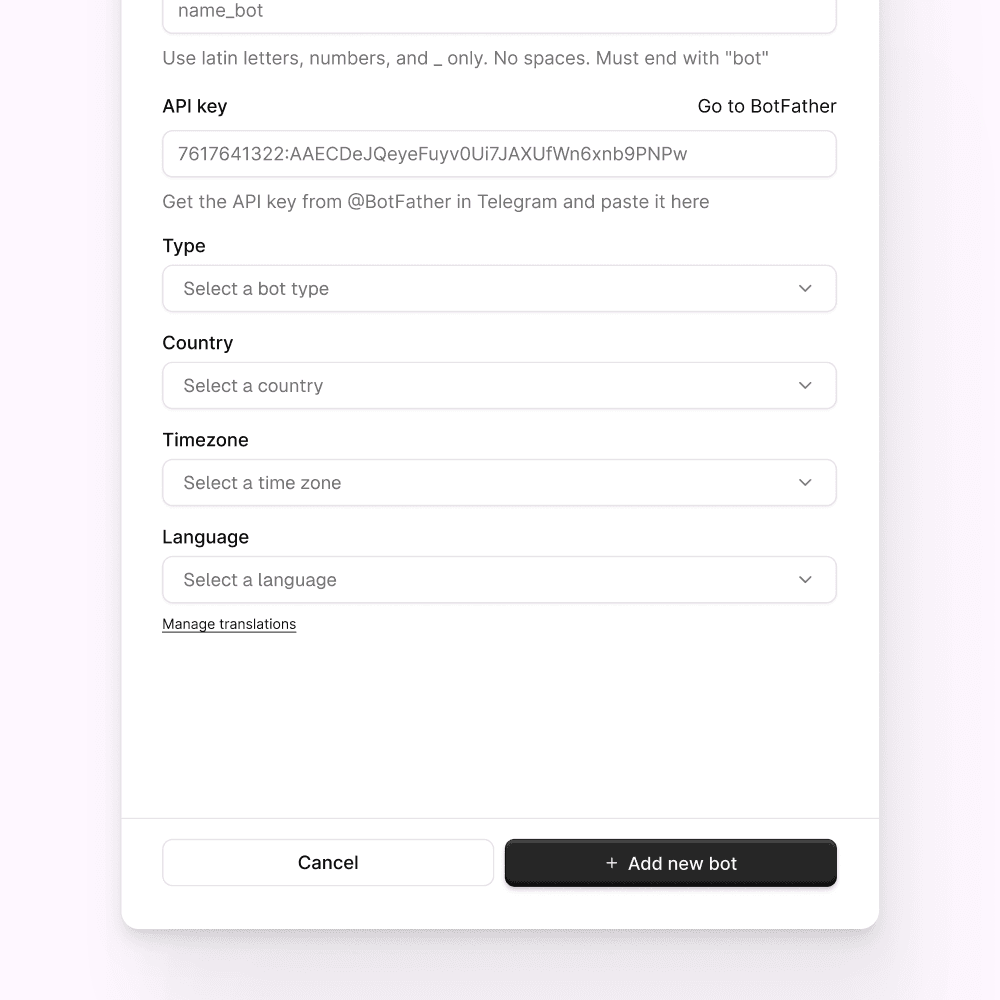
Bot onboarding became the foundation of the platform — a fast setup flow that unlocked every next workflow.
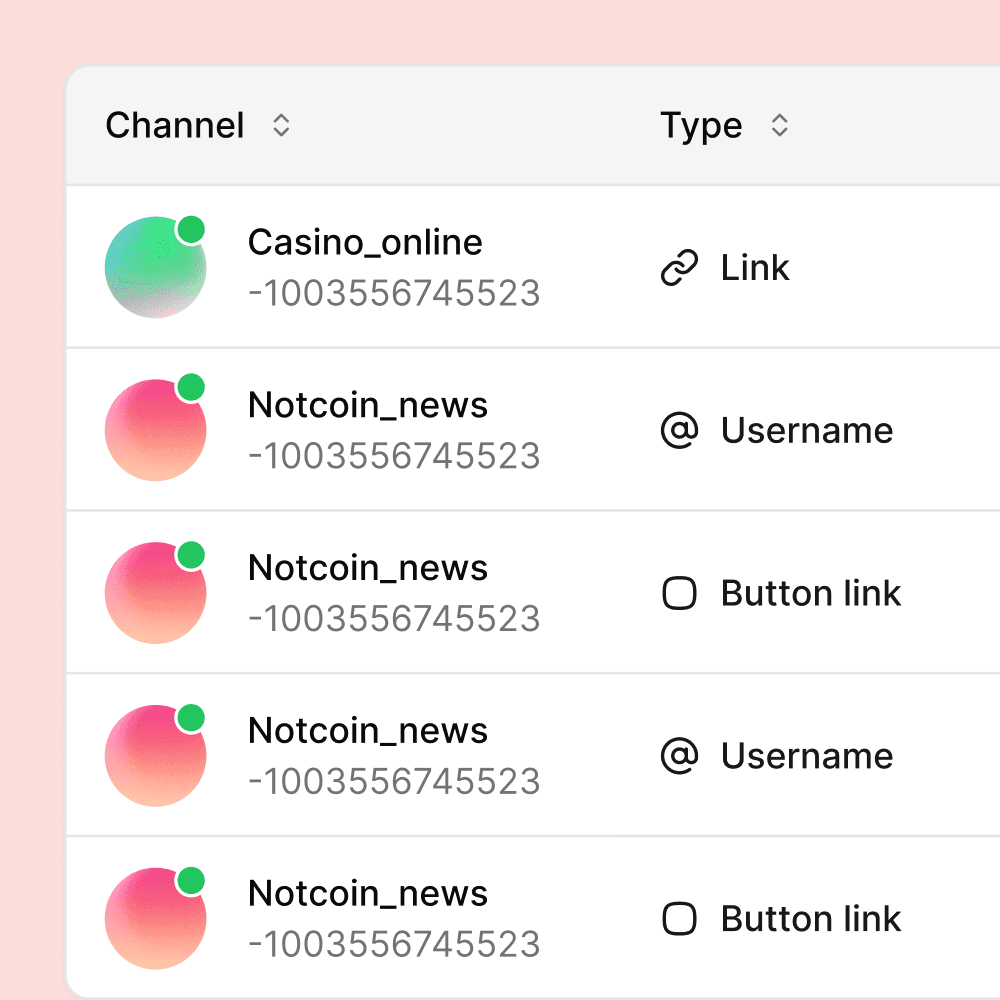
Built the core layer for traffic operations
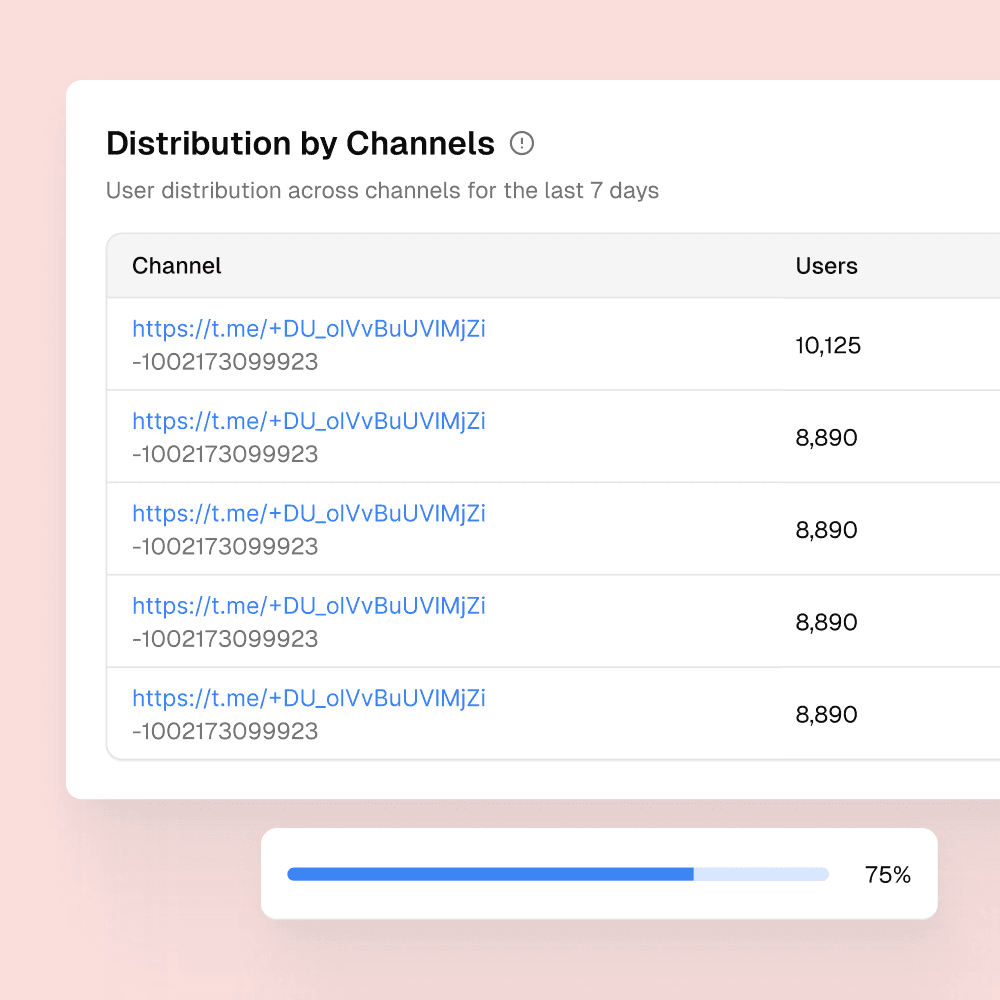
Channels, tracking links, and attribution became one operational layer, so media buyers could manage assets and performance in one place.
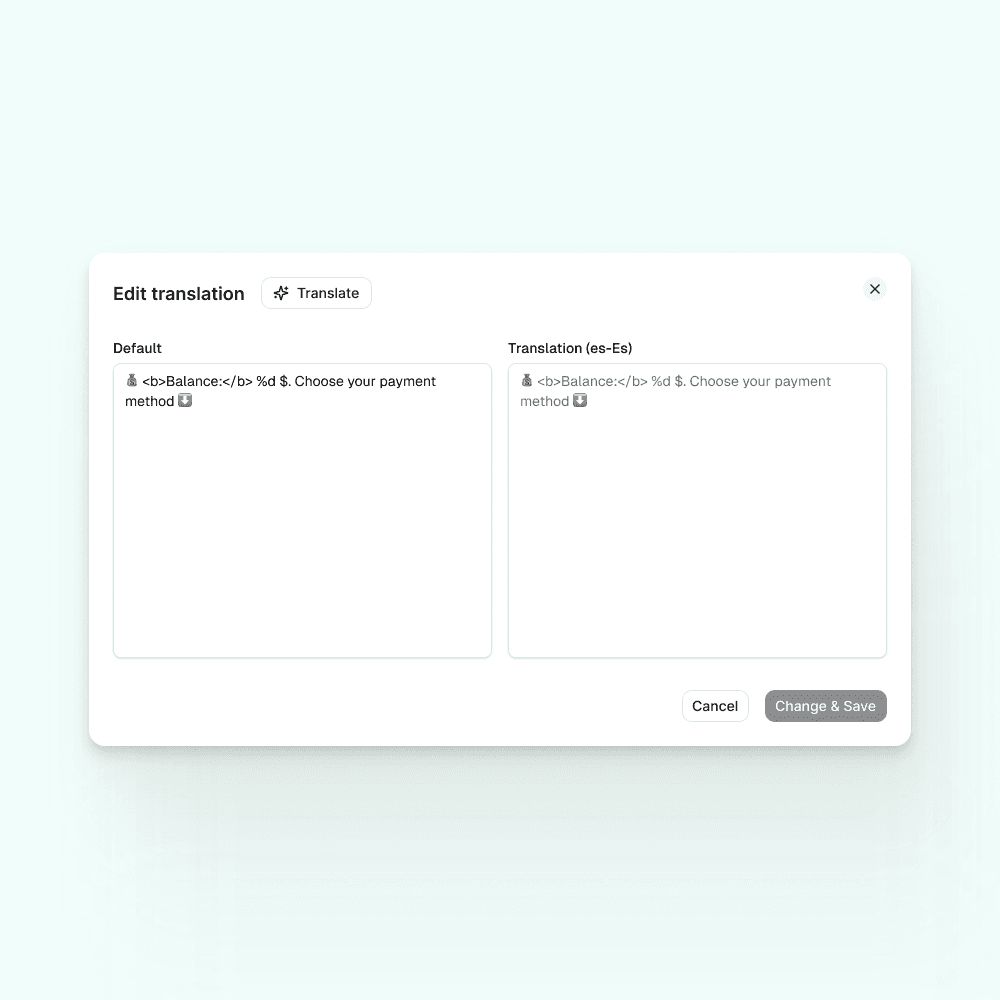
Added a scale layer for market expansion
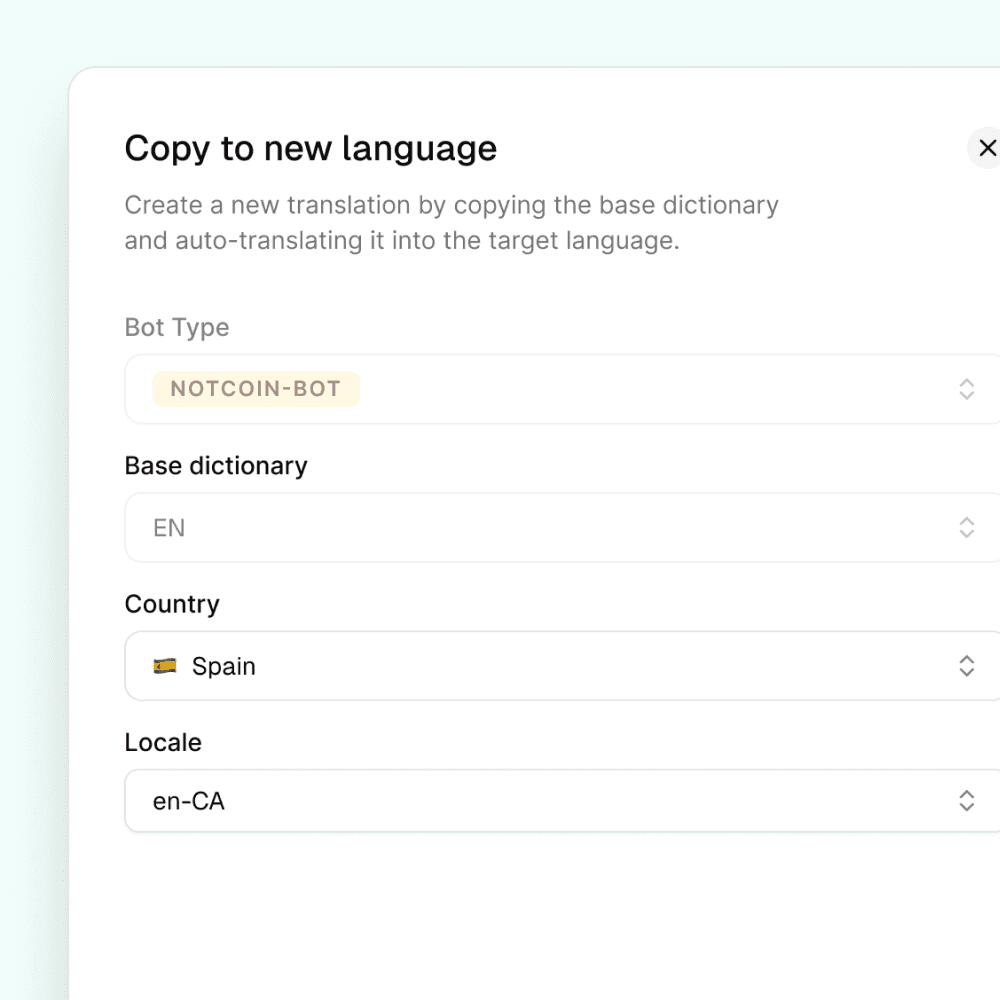
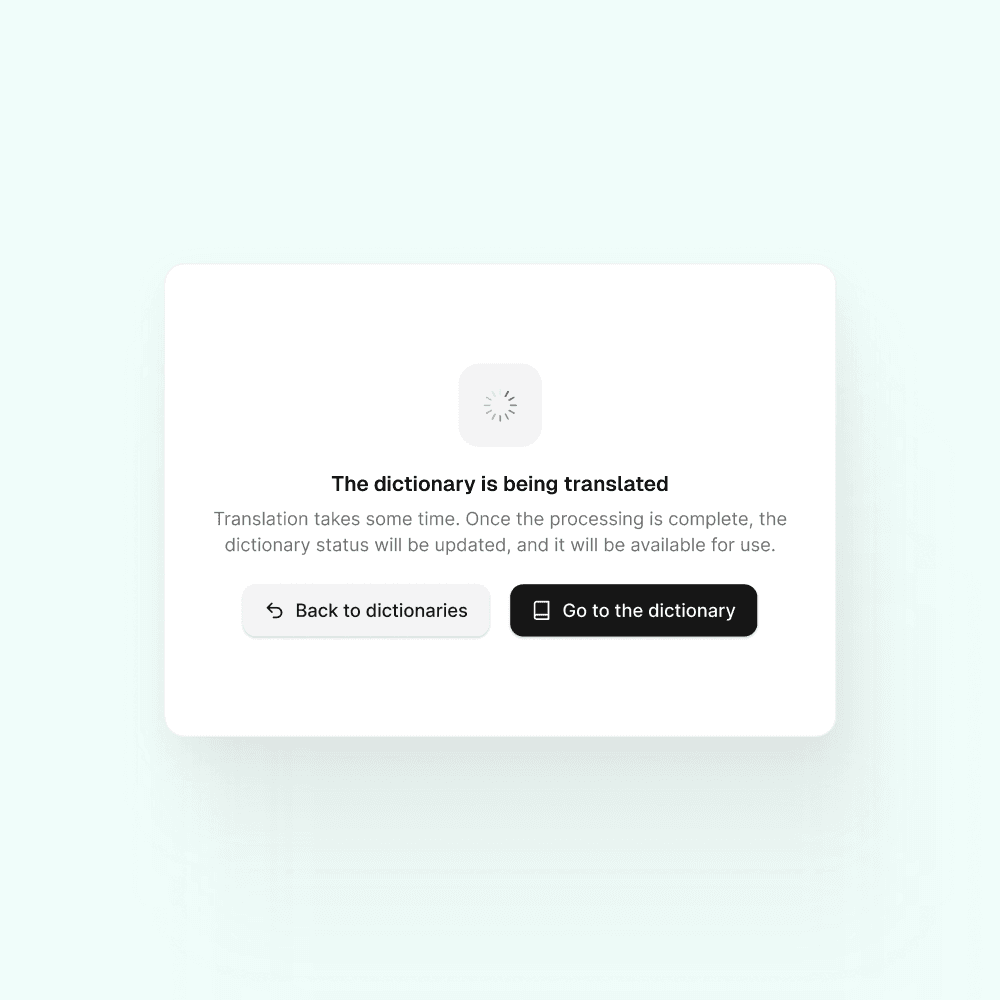
Translations, content mirroring, and geo deployment helped teams scale campaigns across markets without rebuilding the same setup manually.
Turned the product into a communication platform
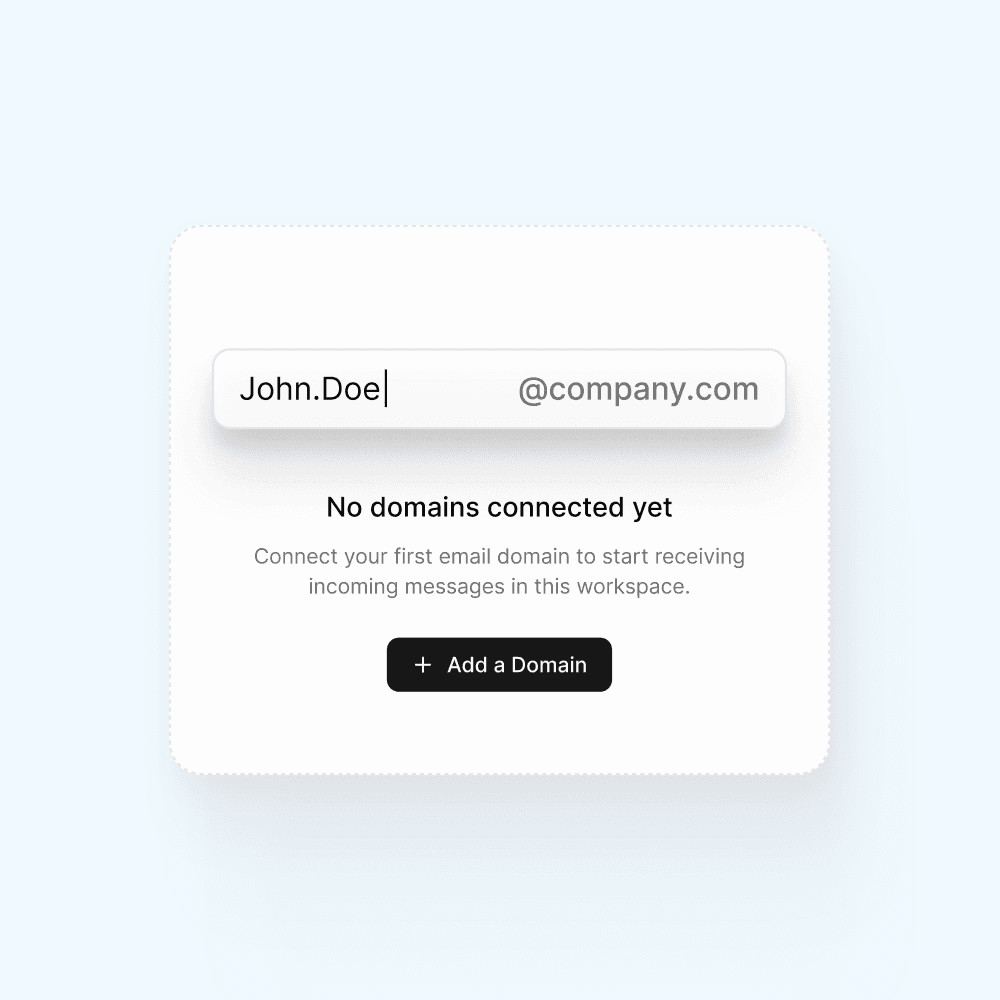
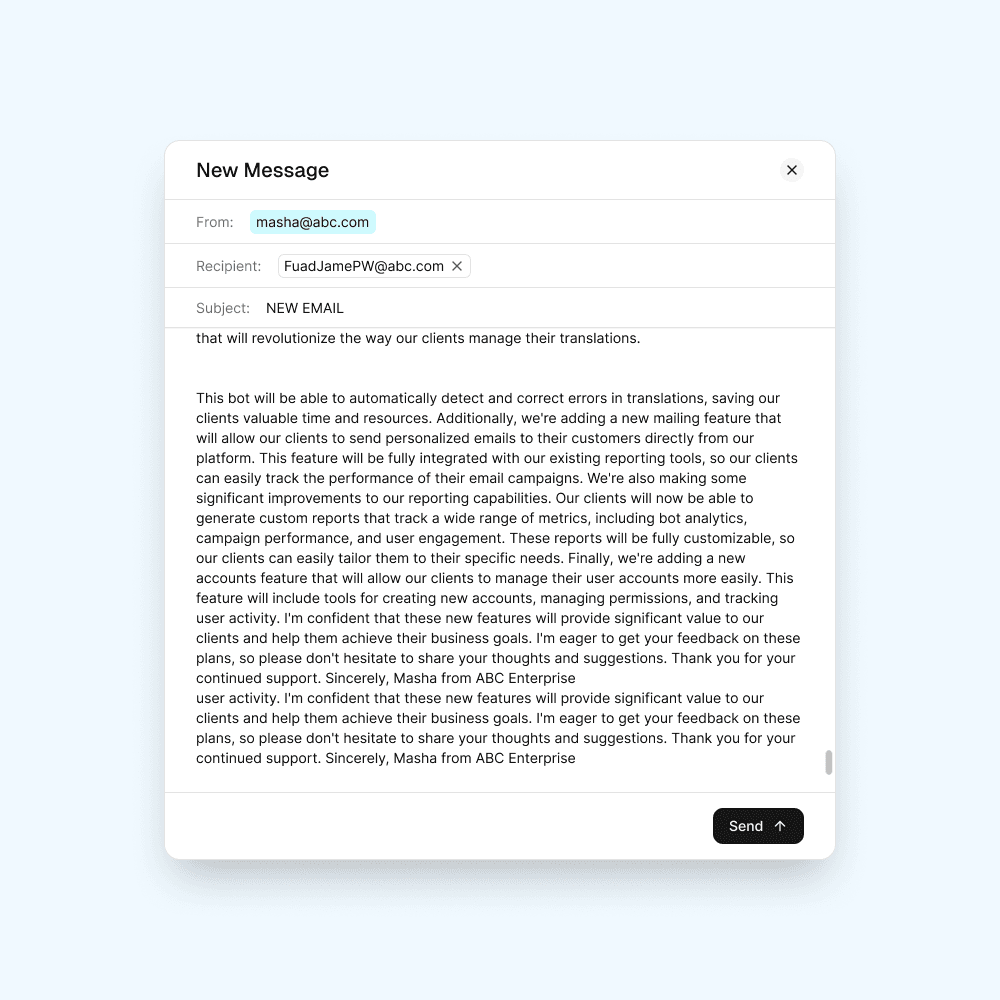
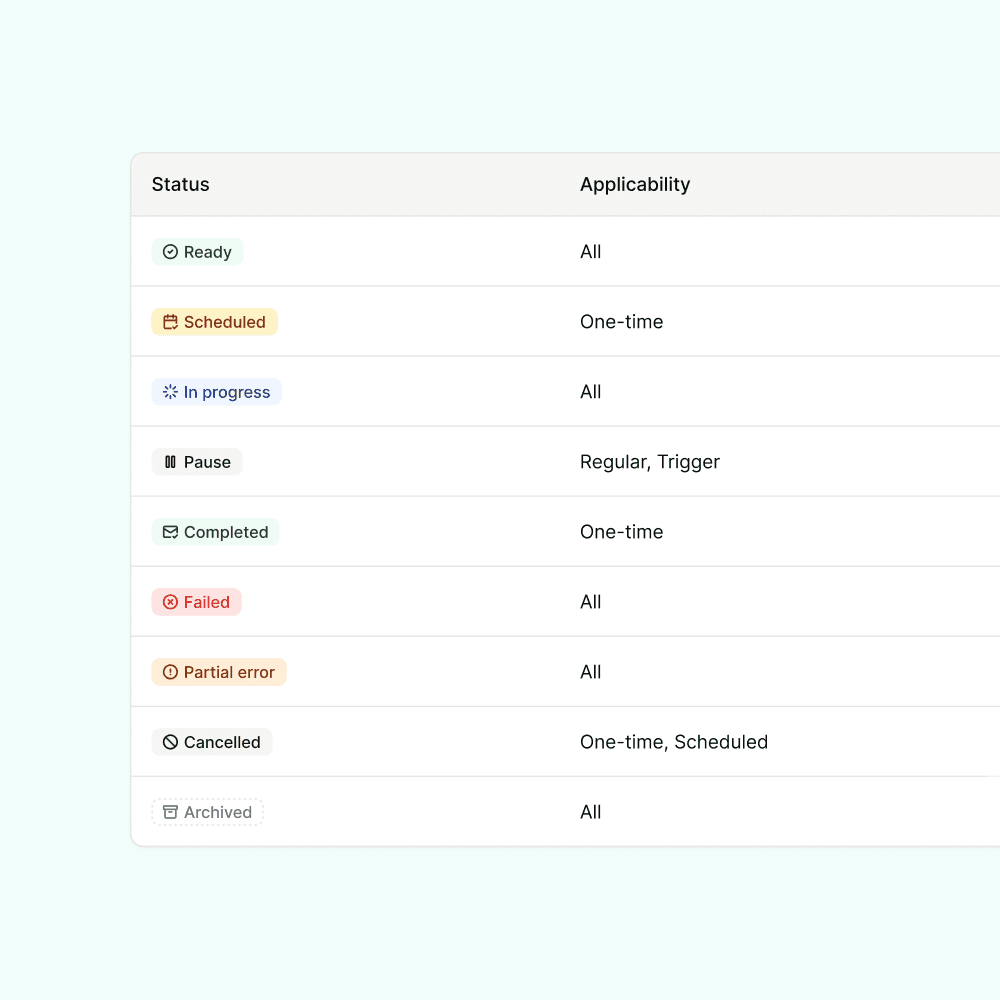
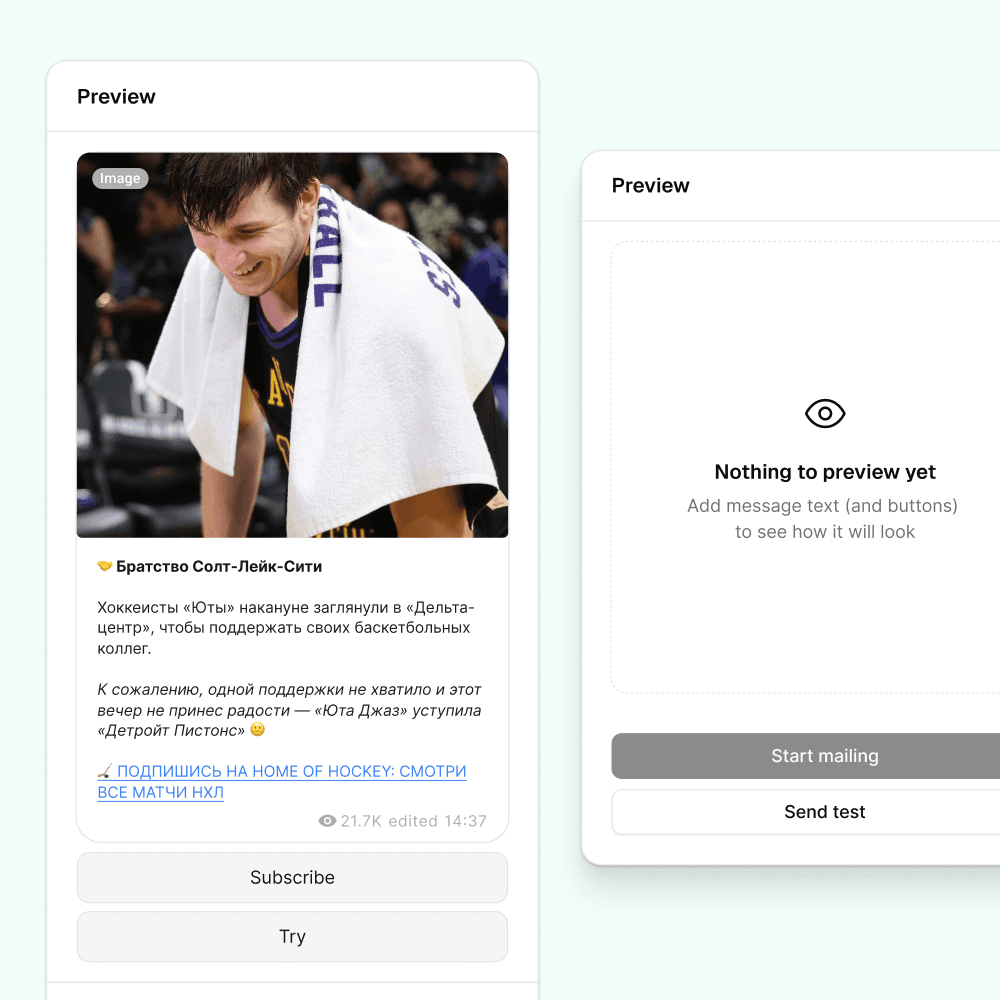
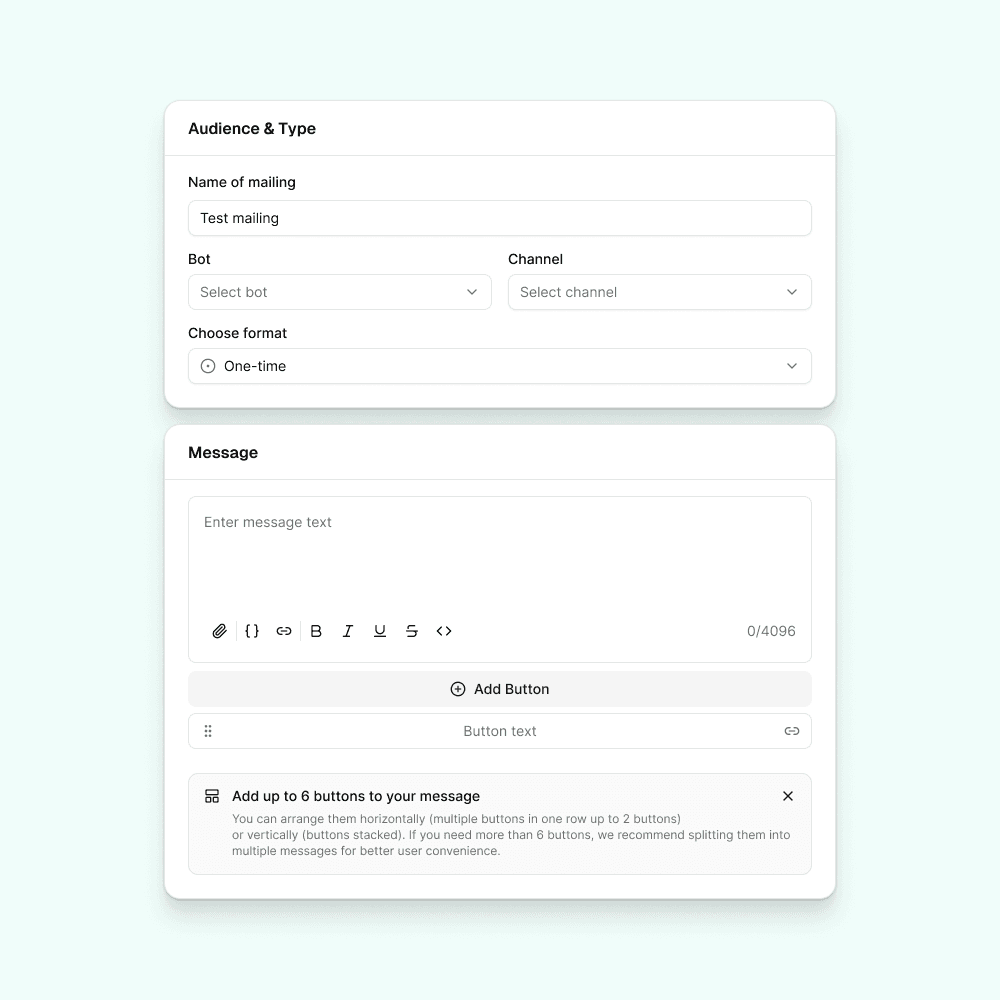
I added Telegram mailings, turning the product from a control panel into a communication platform.
Prevented the product from turning into a feature dump
I kept the platform coherent: every new workflow had to extend the system, not become another isolated module.
Approach
I prioritized the product in layers: first, the platform foundation; second, core traffic operations; third, scaling tools for localization and market expansion; and finally, communication workflows.
This sequencing helped us ship fast without sacrificing structure. Instead of solving isolated requests one by one, I focused on building reusable product logic that could support the next stage of growth.
Results
Successfully relaunched the product from an early MVP into a stable operational platform and continued evolving it into a full product.
Shipped 6+ production workflows within the first 9 months, turning a lightweight dashboard into a system that supported daily operations for clients and media buying teams.
Reduced manual operational overhead by 30–40% across key workflows by consolidating tools, simplifying repeated actions, and designing for scale from the start.
Built the product foundation that the team continued to develop over the following years as the company and product organization grew.